






Call for feedback about the draft International Construction Measurement Standards

Construction industry leaders from around the world are working together to set out a radical new approach to improve the quality of cost data and reporting in construction. Your feedback can influence their work.
Until the late 20th century, companies around the world applied country-specific standards when preparing their financial statements. The increased globalisation of business drove the need for common standards in the accounting arena and the International Financial Reporting Standards (IFRS) were born.
These provide a single set of globally applicable rules which enable comparison of financial performance on a like for like basis. Over the last decade, globalisation has also significantly impacted the land, real estate, construction and infrastructure sectors:
- Internationally, real estate assets reached a value of $217tn in 2015, three times the world’s annual income, 60% of the value of all global assets, including equities, bonds and gold, 36 times the total value of all the gold ever mined (Source: Savills World Research).
- Overall, close to $78 trillion is expected to be spent on infrastructure globally between 2014 and 2025 (Source: Oxford Economics/PwC).
While construction has rapidly moved from being a local to global industry, the way it measures and reports costs varies significantly from one market to the next. In some markets, there are no standards at all. This makes it difficult to compare project costs, hampering decision making and creating barriers to investment.
‘Mutual consent on standards across the industry’ is called for in the World Economic Forum’s report, Shaping the Future of Construction (May 2016), and creating a common language for the sector is the aim of one global initiative pioneered by the International Construction Measurement Standards (ICMS) Coalition.
The ICMS Coalition is a growing group of more than 40 not-for-profit organisations spanning architecture, construction, infrastructure and civil engineering. They first formed during a meeting held at the International Monetary Fund in in Washington D.C. in 2015.
To tackle the problem of cost reporting inconsistency, they are seeking to create a universal system for presenting the cost of construction projects which will allow comparisons to be made on a like-for-like basis between countries.
For more information, see International Construction Measurement Standards (ICMS).
The ICMS Coalition realise that collaboration presents an opportunity to bring monumental improvements to the sector by working together properly for the public interest. They are calling for professionals to support the collaboration and help embed common standards at the heart of construction investment.
The Coalition is consulting extensively with governments, NGO’s, clients, consultants and contractors in order to develop, refine and embed ICMS in working practices.
See Lian Ong (Malaysia), Chair of the ICMS Standards Setting Committee, Chairman of Commission for Construction Economics and Management (Commission 10) of International Federation of Surveyors (FIG):
“ICMS has been established following calls from investors, financiers and clients of the construction industry demanding global rules in reporting, thereby allowing international comparisons on project costs through the use of consistent information.
“Benefits include greater clarity in assessing the feasibility of projects at global, NGO and national level and a BIM-friendly classification to enable the global collection of key data and cost drivers. We thank the organisations and individuals from around the world who are working with us and would like to encourage others to get involved and feedback to the final consultation by answering questions in the survey.”
Michael Framptom from the African Association of QS:
“We have a lot of investors coming to Africa and they need to be confident with the costs they are being presented with for infrastructures and buildings. We need clarity. We need transparency. We need to benchmark. We also need to have value for money. All these things are in the standards that are being written by the ICMS Coalition.”
Varughese Mathew, Global President of the Indian Institute of Quantity Surveyors:
“The world has become a global village and professionals travel from one country to another. Companies also move from one country to another to take different jobs so it’s important for people involved in construction projects to have standards they are familiar with. In this respect, ICMS will be an excellent tool.”
TT Cheung, President of the International Cost Engineering Council:
“ICMS will give us a platform that provides clarity and does away with uncertainty. Whether you are a user or service provider, this project is important.”
Julie De La Cruz FRICS, Technical Director, Arcadis and founder of the Philippines Institute of Quantity Surveyors:
“Arcadis operates in over 40 countries and we have projects in over 70 countries. In the Middle East alone we operate in five countries so you can imagine that we convert costs between different standards. ICMS as a universal standard approach will solve problems of inconsistency. It will help us deliver better value for money, consistency of approach and providing meaningful benchmark information.”
Neal Argent, Director, EY UK:
“ICMS for us is about how you create confidence in the market. How do you get good comparability of costs so that you remove the degree of variability that mega projects suffer from in terms of cost estimation.”
Written by:
- Alan Muse Global Director of Built Environment Professional Groups.
- Kate Symons, Global Communications Manager RICS, UK.
Please find the original article here.
--Future of Construction 15:26, 20 Jun 2017 (BST)
Featured articles
Check out some of the best features and news from Designing Buildings as well as key stories from around the web.
Industrial heritage in the Ruhr
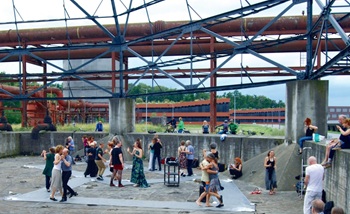
A marked difference to the fate of industrial landscapes in the UK.

Communities will be able to build their own clean energy.
Why diversity and inclusion matters for SMEs

CIOB’s D&I Charter shows how practical changes can support long-term growth.
Cut electricity bills to power growth

Coalition sends joint letter to the Chancellor.

Gasholders: a history in pictures. Book review.
Recognition, influence and growth

SocEnv identifies three strategic pillars in new strategy to 2045.
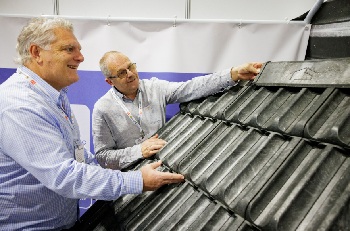
Discover the future of roofing, cladding and insulation.

New guidance for professional practice, cultural change and regulation in social housing.

The heritage of nuclear and conventional power stations.
New measures to stop people being ripped off

Government to protect families from cowboy builders and aggressive bailiffs.

New Futurebuild showcase brings an innovation-first approach.
National Planning Policy Framework
Understanding the 2026 changes.
Comments